Field guide / 03 / Rock pools
Life between the waterlines
A pool is both a hollow in the shore and a changing place to live. Let the rock explain the setting, then wait for the small movements.
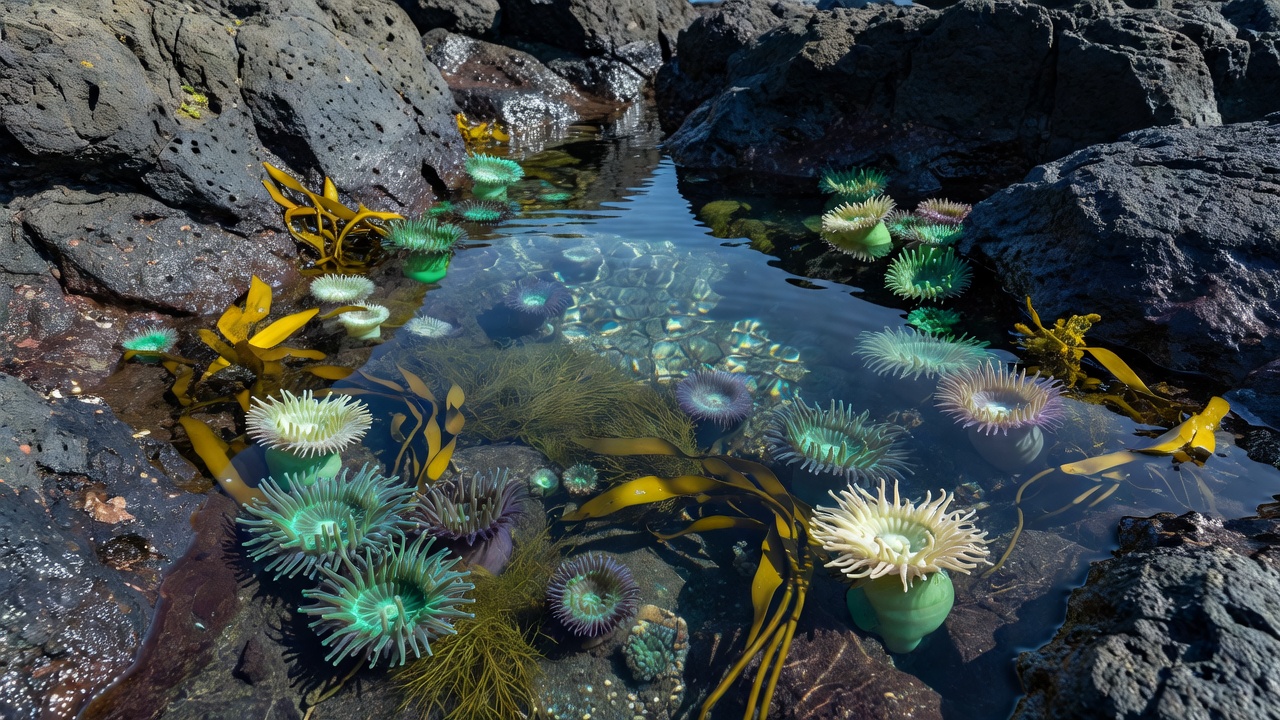
Read the container first
Before looking for animals, trace the pool’s outline. A straight-sided hollow may follow intersecting fractures. A stepped edge may reflect bedding. A rounded basin may have been enlarged through several processes, including abrasion and weathering. Different histories can produce similar shapes, so avoid assigning an origin from the outline alone.
Notice whether the pool is shallow or deep, exposed or shaded, isolated or joined to a channel. These details influence how quickly water can warm, evaporate or be renewed. A photograph of the whole pool, taken without stepping into it, often explains more about its setting than a close-up of one inhabitant.
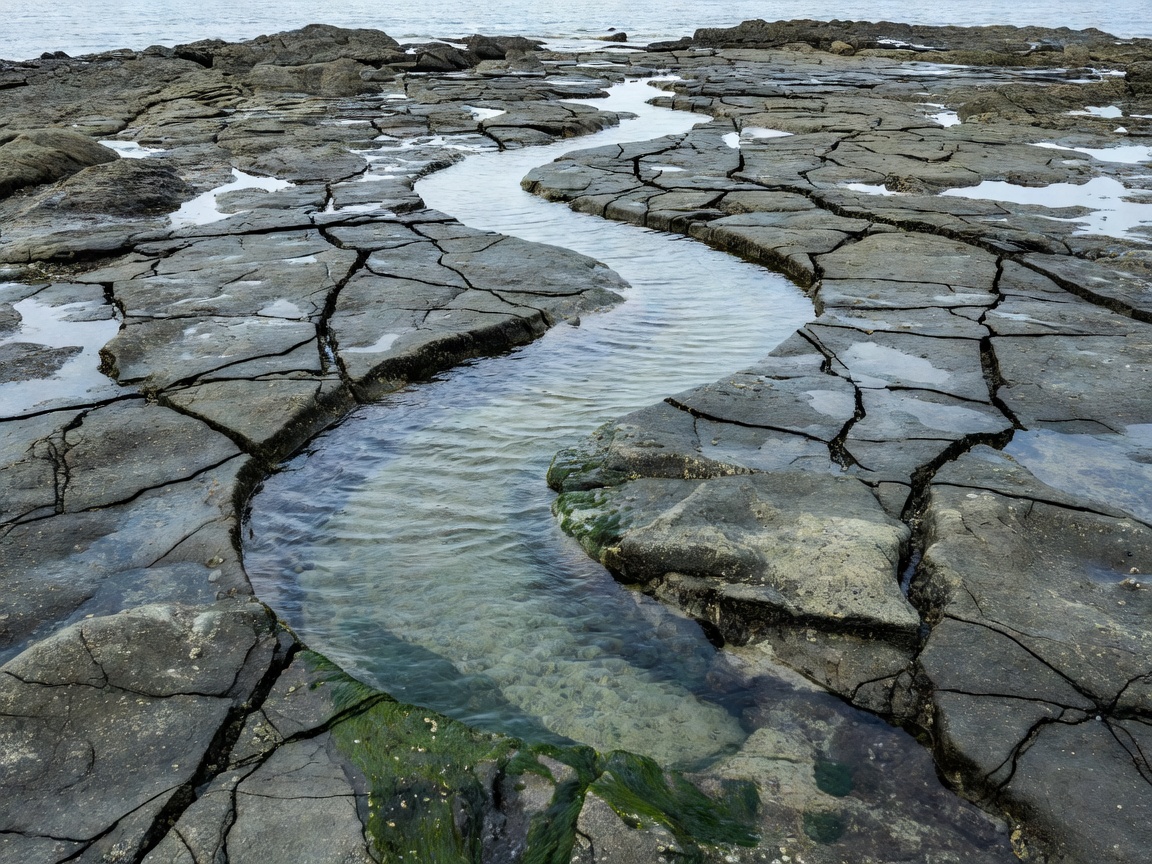
There is more than one waterline
The intertidal zone lies between high and low tidal levels, but it is not a simple set of neat stripes. Exposure to waves, rock orientation, shade and local tidal range affect which organisms occur where. Splash can reach above the usual high-water level, while deep pools may retain water well after surrounding surfaces emerge.
Higher on the shore, organisms commonly face longer periods out of the sea. Lower down, immersion generally lasts longer, but wave force and competition still matter. Compare nearby surfaces rather than assuming a universal pattern. A shaded crevice and a sunlit ledge at the same height can offer very different conditions.
Wait for the pool to become visible
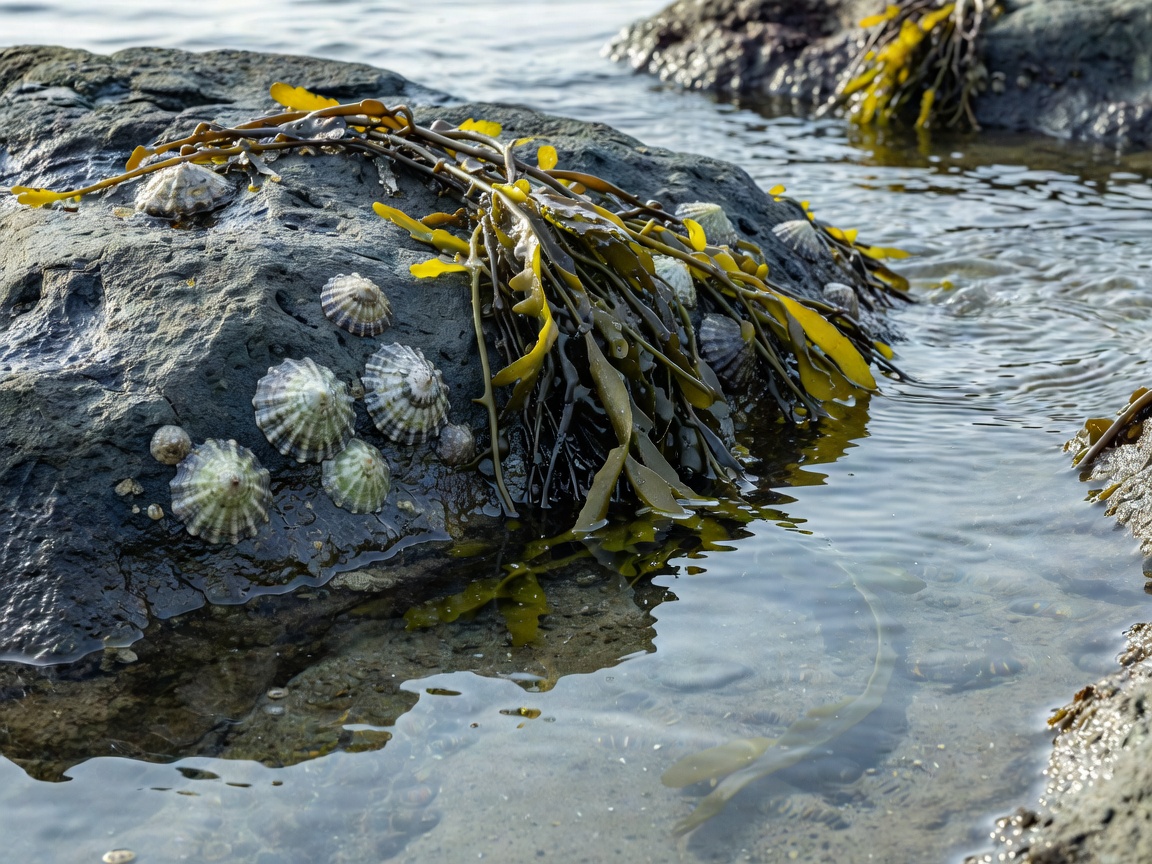
Stop moving and let your eyes adjust to reflections and shadows. Watch one small patch for a while. A shell that changes position may belong to a grazing snail or contain a hermit crab. An anemone may resemble a soft lump when its tentacles are withdrawn. Seaweed moving in a current is not necessarily evidence of an animal underneath.
Limpets hold tightly to rock and graze microscopic growth. Barnacles are crustaceans rather than small limpets. Their feeding appendages may be visible when they are submerged and active. These are useful starting points, not identification guarantees: species vary geographically, and photographs may not show the features needed for a confident name.
Small pools can change quickly
Sunshine can warm a shallow pool, evaporation can increase salinity, and rainfall can dilute its water. Photosynthesis and respiration influence oxygen conditions. The size of each change depends on the pool’s depth, exposure, inhabitants and connection to the sea. A pool that looks still is not an unchanging miniature aquarium.
This is why collecting animals into a bucket creates problems beyond removing them from view. Temperature, oxygen and crowding can change, and returning an animal to a different pool may not restore its original conditions. Our approach is simple: do not collect, feed, handle or relocate wildlife, even for a photograph.
Prepare for the shore, not just the pool
Use a current tide prediction for the relevant location and check local weather, swell and access advice. Tide predictions describe expected water levels; they do not account for every wave or guarantee a dry route. A channel can fill behind you while the place where you stand still appears exposed. Keep the return route under review and leave with a generous margin.
For UK planning, the RNLI provides coastal safety information and the Met Office provides weather forecasts. Neither replaces site-specific instructions. Elsewhere, use the appropriate local marine and coastal authorities. If the setting is unfamiliar, an authorized guided visit can be a better choice than independent exploration.
Keep a record without rearranging the habitat
Record the date, broad shore position and what you actually saw. “Small striped snail on shaded rock” is useful even without a species name. Include a sense of scale using the surrounding scene; do not put an object against an animal. Avoid lifting stones or pulling back attached seaweed to expose hidden life.
Wembury in Devon and St Abbs in Scotland are well-known settings for learning about rocky-shore life, each with its own management context. A famous name does not mean unrestricted access. Check current local guidance, protected-area rules and organized activity information. The most rewarding visit may involve one accessible pool observed patiently rather than a long search for rarities.